

Virtuoso QA
Review ratings
Integration support
None
Ideal for
Free
Price
Free
Gallery

About Virtuoso QA
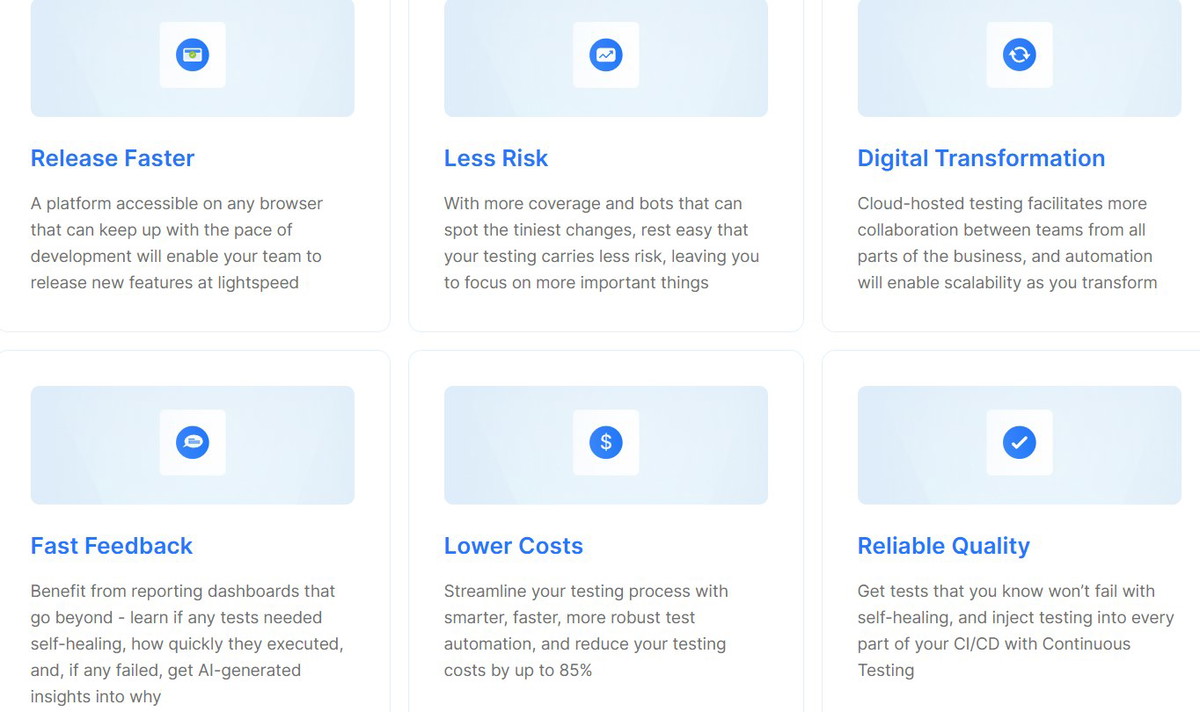
Virtuoso is an automated testing framework that leverages AI, machine learning, and natural language programming to enable codeless test creation, execution, and upkeep. It empowers users to formulate tests in simple language, automatically detects UI components, and includes self-healing functionalities to adjust to application changes. The platform also connects with multiple CI/CD tools, offering extensive reporting and analytics to improve the testing workflow across various sectors and technologies.
Virtuoso QA key features
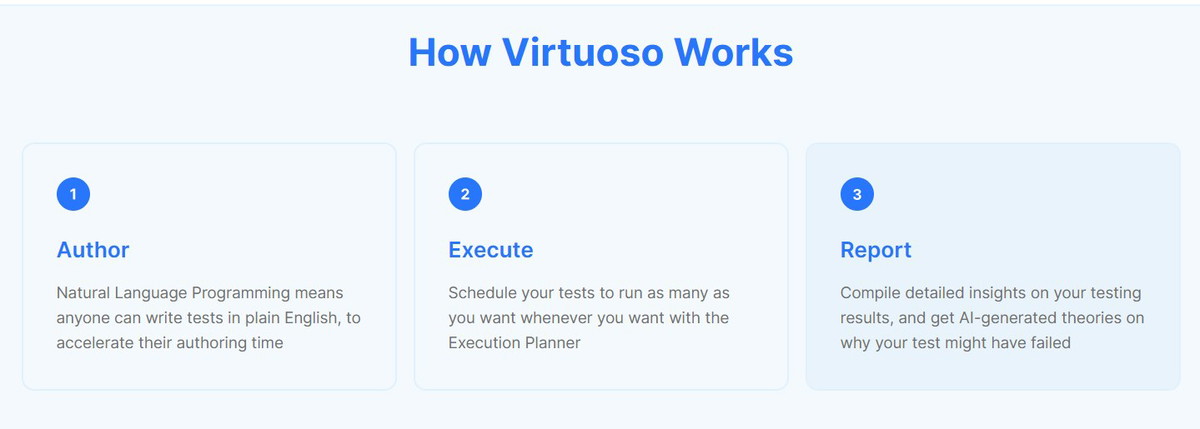
Test Creation: Formulate tests using plain language, enabling users to develop tests based on requirements without requiring coding expertise.
Test Execution: Run tests with the capability to evaluate the application's status and conduct root cause analysis for any issues encountered.
Test Management: Leverage AI and ML-driven self-adjusting tests that adapt to application changes, minimizing the need for manual updates.
Test Analytics: Produce comprehensive reports and insights to track test outcomes and application performance in real-time.
Integrating UI Testing with API Interactions: Combine functional UI testing with API interactions to provide thorough testing that accurately reflects user experiences.
Virtuoso QA use cases
Test Creation: Develop tests using plain language derived from specifications, allowing users to formulate tests without any coding skills.
Test Execution: Automate the scheduling and running of tests, featuring capabilities for root cause analysis to diagnose test failures.
Test Management: Leverage AI and ML-driven self-healing tests that automatically adapt to application changes, minimizing manual upkeep.
Integrating UI Tests and API Interactions: Conduct comprehensive end-to-end testing by merging functional UI tests with API interactions to validate overall application performance.
Analytics and Reporting: Produce real-time testing analytics and insights to track test outcomes and uncover trends for strategic decision-making.
Useful for
Natural Language Test Creation: Allows users to formulate tests using everyday language, making the test development process accessible to non-technical members and accelerating the authoring workflow.
Self-Adaptive Tests: Employs AI and machine learning to automatically modify tests when application components change, minimizing maintenance efforts and ensuring consistent test accuracy.
Thorough Test Execution: Delivers in-depth insights into application performance and root cause analysis, enabling teams to swiftly pinpoint and resolve issues.
Unified UI and API Testing: Promotes comprehensive testing by merging functional UI tests with API interactions, offering a complete perspective on user experience and application performance.
Instant Reporting and Analytics: Grants immediate access to testing metrics and patterns, empowering teams to make data-driven decisions and enhance testing methodologies effectively